
SXC-D32L — Integrated Delta P Control
SXC-D32L Delta P Pressure Differential Pulse Controller
A three-in-one pulse controller with an integrated differential-pressure sensor, combining sequential valve control, intelligent demand cleaning, and high/low Delta P alarms in one panel for efficient baghouse operation.
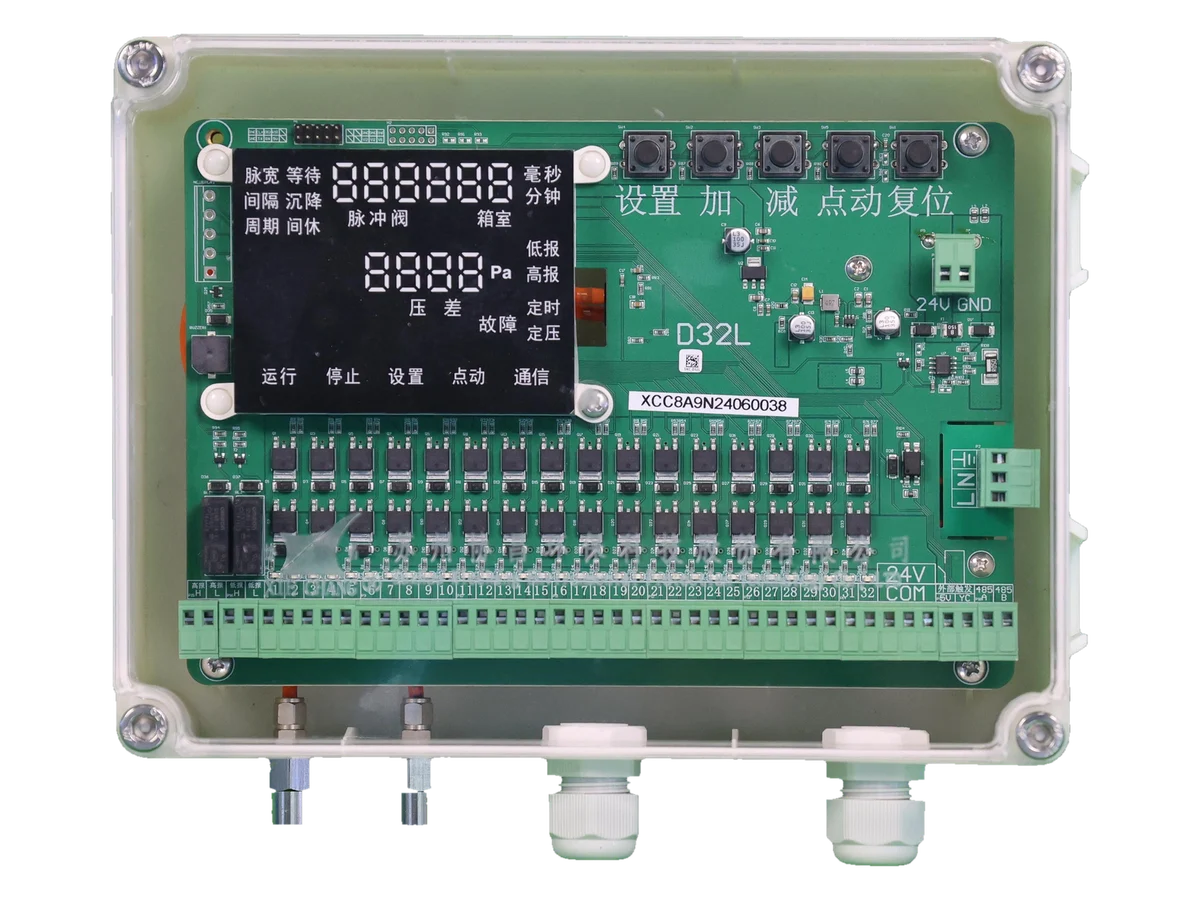
Technical Parameters
Core operating specification.
Model NumberSXC-SK01-C8A9-D32L-P (sold as SXC-D32L, with built-in ΔP sensor)
Control Capacity32 channels; pulse valves and lift (offline) valves freely allocated
Cleaning ModesOnline or offline, selectable
Input VoltageAC220V (±10%) 50Hz or DC24V (±10%) — either may be connected
Output VoltageDC24V
Output Current1.5A
Built-in ΔP SensorChamber pressure sampling 0–3000 Pa; on-screen ΔP display and zero calibration
Trigger ModesTimed sequential / ΔP-triggered / ΔP with timed fallback; remote start-stop over Modbus
ΔP AlarmsAdjustable high and low alarm values with relay outputs
CommunicationRS485 Modbus-RTU — status upload, parameter setting, remote start/stop; master–slave interconnection
Modbus Address / Baud RateAddress 0–127; baud 4800–115200 (default 9600)
Valve Break DetectionBroken valve circuits detected and readable over Modbus
Pulse Width Range10–9999 ms in 1 ms steps (default 80 ms)
Pulse Interval Range1–600 s in 1 s steps (default 1 s)
Cycle Time Range0–9999 min (default 0 min)
Start Delay0–300 s (default 5 s)
Lift-Valve Wait Time0–60 s (default 8 s)
Lift-Valve Settle Time0–60 s (default 8 s)
Lift-Valve Idle Time0–9999 s (default 10 s)
EnclosureTransparent hanging PC shell, 190 × 255 × 105 mm (metal-enclosure JK02 variant available)
Operating Environment−20°C to +60°C; relative humidity ≤85%
Product Standards
Integrated sequencing, sensing, and demand cleaning.
Three-in-One IntegrationPulse sequencing, differential-pressure measurement, and cleaning/alarm logic share one controller panel
Built-in DP SensorDirect air-pipe connection enables demand cleaning without a separate pressure display panel
Four Trigger ModesChoose timed, Delta P, mixed-fallback, or Modbus-commanded cleaning to match the baghouse control strategy
Online / Offline CleaningPulse valves and lift valves freely allocated across the channels for online or offline cleaning
Digital MonitoringThe display identifies the active pulse-valve sequence for easier setup and troubleshooting
Alarm ControlIndependent high- and low-differential-pressure trigger and return values support filter-condition monitoring
Product Videos
Related demonstrations and selection videos.
SXC-D32L Pressure differential pulse controller
Technical Drawings
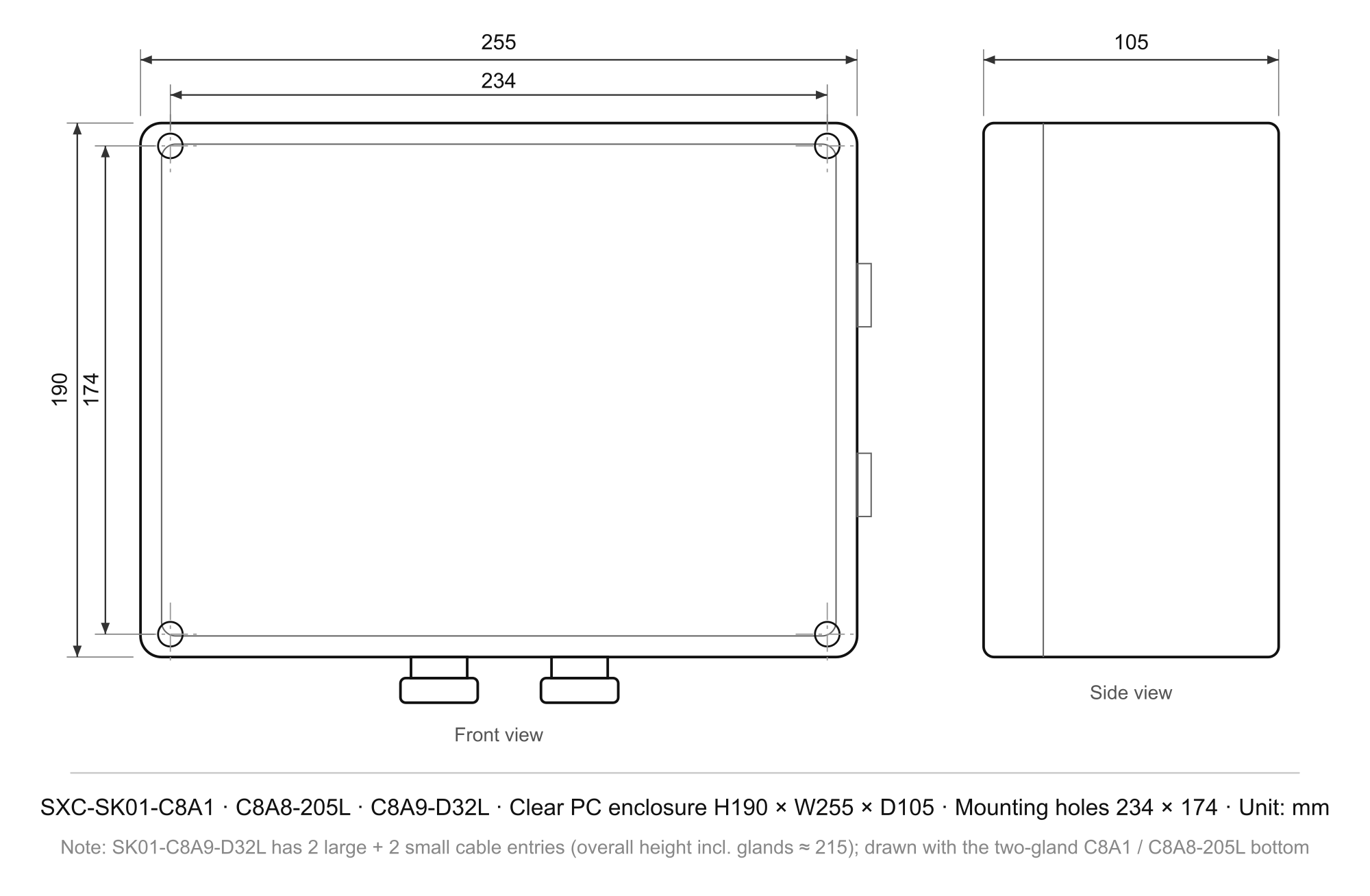
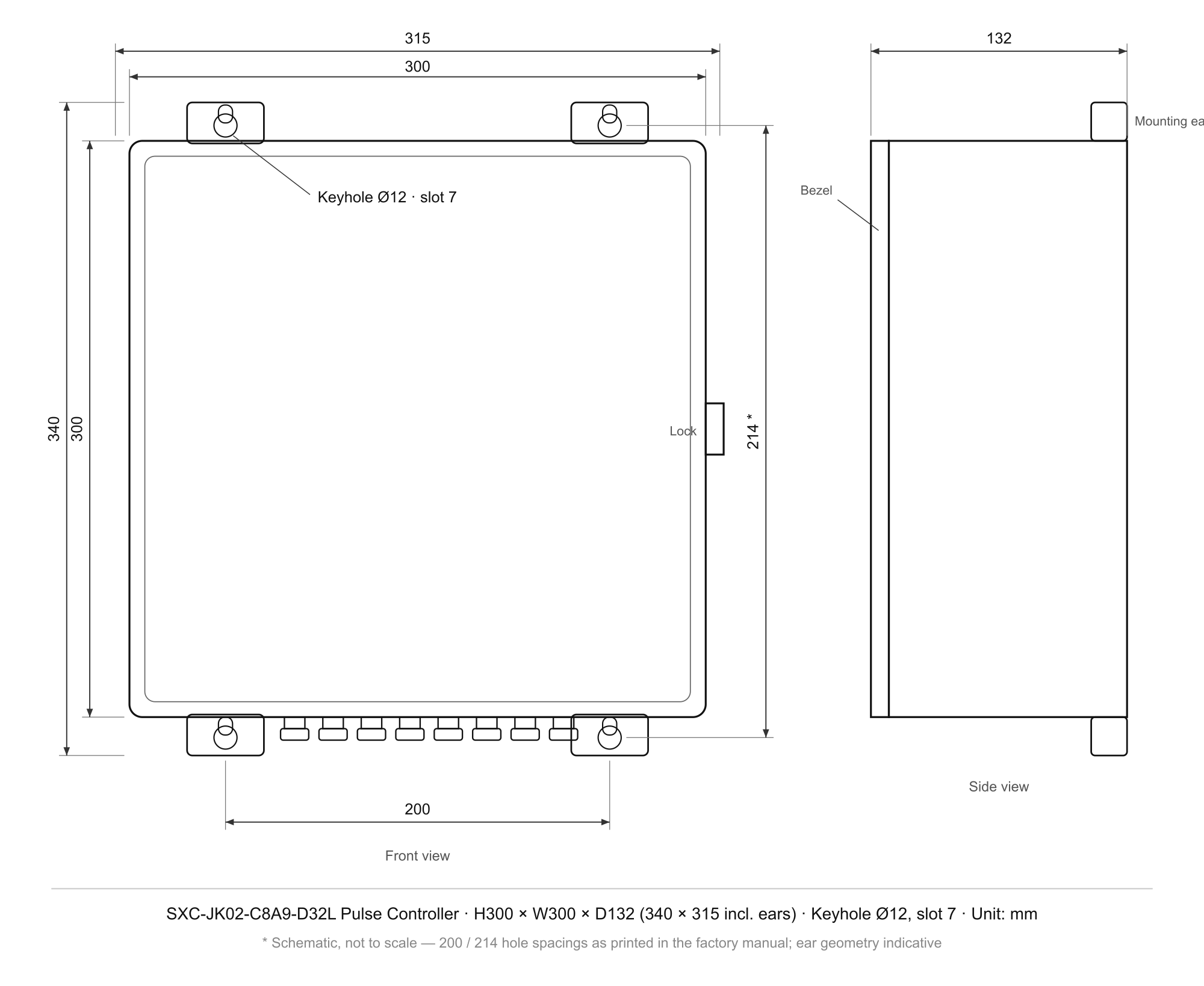
Installation dimensions for this product.
 🔍 Click to enlarge
SXC-SK01-C8A9-D32L
SXC-SK01-C8A9-D32L · 32 ch · ΔP pulse controller — Enclosure & Mounting Drawing
| Overall width | 255 mm |
|---|---|
| Overall height | 190 mm |
| Depth | 105 mm |
| Mounting hole spacing (W) | 234 mm |
| Mounting hole spacing (H) | 174 mm |
 🔍 Click to enlarge
SXC-JK02-C8A9-D32L
SXC-JK02-C8A9-D32L · 32 ch · wall-cabinet pulse controller — Enclosure & Mounting Drawing
| Overall height | 300 mm |
|---|---|
| Overall width | 300 mm |
| Depth | 132 mm |
| Incl. mounting ears | 340 × 315 mm |
| Keyhole slots | Ø12 · slot width 7 mm |
| Ear hole spacing | 200 / 214 mm |
Knowledge Base
Practical answers for this product.
Troubleshooting
How do you use differential pressure (DP) to tell whether your pulse cleaning is working?
With clean-on-demand control the DP should sawtooth within about a 1-inch water-column (~249 Pa) window between the high and low setpoints. If it can't pulse down to the low setpoint, or pulses constantly, the filters or the air supply are the problem.
differential pressureDPsetpoint
Troubleshooting
How does over-pulsing affect pulse valves and filters, and how should the setpoints be tuned?
Every pulse flexes the filter media, so over-pulsing shortens bag life and wastes compressed air. Set realistic high/low DP limits so the collector spends most of its time between them instead of cycling constantly — and don't over-pulse to mask bad air or spent filters.
pulse frequencysetpoint tuningbag life
Troubleshooting
The pulse valves are firing but the differential pressure won't come down — what should I check?
Work along the cleaning chain: confirm each pulse valve truly snaps open, check that the air-receiver tank holds pressure through a cleaning cycle, inspect the blow pipe and nozzle alignment, review the controller's pulse on-time and interval, and confirm the supply air is clean, dry and at the valve's rated pressure. If the pulses are strong and the air is right but DP still won't recover, the filter bags are likely blinded — plan a bag change instead of just lowering the setpoint.
differential pressure will not droppulse cleaning not workinghigh DP troubleshooting
Troubleshooting
The pulse valves keep firing but the differential pressure won't drop — could the hopper be the cause?
Yes — a hopper that isn't emptied in time is a classic hidden cause. When dust bridges or piles up into the bag zone it is re-entrained and re-deposits on bags you just cleaned, so the DP controller keeps triggering the valves while DP still won't fall. The result is constant pulsing that wastes compressed air and adds diaphragm cycles without fixing anything. Before blaming the valves, check the hopper: confirm the discharge (rotary airlock, screw conveyor, or valve) is running, and clear any bridging or buildup.
hopper not dischargingdust bridgingpulse valve over-pulsing
Product Q&A
When should you choose the SXC-D32L (SK01-C8A9-D32L) offline pulse controller?
Choose the SXC-D32L when a compartmented baghouse needs more flexibility than a fixed channel split: its channels can be freely allocated between pulse valves and lift valves, and the built-in differential-pressure sensor lets it clean on demand and raise high/low ΔP alarms without any external instruments. All ranges and factory defaults are in the technical parameters table on this page.
SXC-D32LC8A9-D32Lwhen to choose D32L